
Spring 2020 | The DTC community mourns the passing of William “Bill” Lapenta, Ph.D. Bill was the Acting Director of NOAA’s Office of Weather and Air Quality (OWAQ) within NOAA’s Oceanic and Atmospheric Research that supports world-class weather and air quality research. He was also the guiding force and energy behind the Earth Prediction Innovation Center (EPIC) with the goal to launch the U.S. forward as the world leader in numerical weather prediction through public-academic-private partnerships. He was committed to conquering the… Read More
Director's Corner: A Look Ahead
Dorothy Koch

Spring 2020 | At the National Weather Service’s Office of Science and Technology Integration (OSTI), we’re currently planning milestones for the coming year with our partners. OSTI manages a broad portfolio of research and development efforts designed to improve operational forecast capabilities, and our partners in these efforts are in both the research and operational communities. We aim to understand forecaster priorities, and to communicate operational requirements so that community members can come up with innovative… Read More
Who's Who: LinLin Pan
NOAA
Spring 2020 | LinLin was born into a family of farmers in Southeast China where the weather is dominated by the Asian Monsoon. “I can’t remember how many times my parents sighed gravely in front of the ruined crops because of the wrong prediction of Mei-yu – endless rainy days during the summer. My family would starve in this case.” LinLin was determined to study weather to help farmers, and now he works to make sure severe weather events are forecasted accurately. Diligent and determined, Linlin was accepted into the Department of… Read More
Bridges to Operations: MET Collaboration

Spring 2020 | The NOAA Environmental Modeling Center (EMC) and the Developmental Testbed Center (DTC) are currently collaborating on using the Model Evaluation Tools (MET) for the verification and validation of EMC’s suite of environmental prediction models, such as the Global Forecast System (GFS), the Global Ensemble Forecast System (GEFS), and the Rapid Refresh (RAP)/High Resolution Rapid Refresh (HRRR). Both centers are currently working towards creating an operational configuration of MET that can be implemented on NOAA’s Weather… Read More
Visitors: Evaluating the Impact of Model Physics on Forecasts of Hurricane Rapid Intensification
Visitor: Jun Zhang
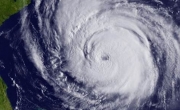
Spring 2020 | Dr. Jun Zhang, a scientist from the University of Miami and visitor to the DTC in 2018, investigated the impact of model physics on the forecast performance of hurricane models for hurricanes undergoing rapid intensification (RI). Accurate predictions of hurricane intensity could significantly reduce the economic loss, especially if a hurricane makes landfall at well-developed coastal regions. Hurricane intensity is influenced not only by environmental factors but also by internal dynamics and thermodynamics.… Read More
Community Connections: Communication and Outreach in the Unified Forecast System
Spring 2020 | The Unified Forecast System (UFS) is a coupled, comprehensive Earth modeling and data assimilation system that will be used in NOAA operations and by the research community. There are naturally a lot of questions about UFS from potential collaborators, for example: What UFS codes are available to run? How do I find out more information about the project, and how can I get involved? One of the roles of the UFS Communication and Outreach Working Group (C&O WG, for short) is to communicate the answers to such questions… Read More
Did you know?: CCPP Framework
Is to be Used for Future Atmospheric Chemistry Modeling at NCAR
Spring 2020 | The Atmospheric Chemistry Observations and Modeling laboratory at NCAR has been developing the Model Independent Chemistry Module (MICM) to represent chemical transformations in any atmosphere model. To make this happen, MICM is designed to work with the Common Community Physics Package (CCPP) Framework, a software defining how host models access physics parameterizations including chemistry. MICM gathers information on trace gases and chemical reactions from a database (coined the “Chemistry Café”). It then… Read More
Announcement: The First Unified Forecast System (UFS) Users’ Workshop To Be Held Virtually
New Deadlines Posted

2020-04-28 | Due to the current situation regarding COVID-19, the first Unified Forecast System (UFS) Users’ Workshop will be held virtually online, from 27-29 July, 2020. The aim of the workshop remains to establish an annual forum to exchange ideas, advance education on applying the UFS, and embrace the full potential of the community to support and help improve the UFS modeling and prediction system. A diverse group of participants from across the weather enterprise are encouraged to participate and engage in this forum, with the… Read More
Software Release: Announcing UPP V4.1 Release

2020-03-31 | The Developmental Testbed Center (DTC) is pleased to announce the release of the Unified Post Processor Version 4.1. While many of the functionalities and supported features remain the same as previous versions, there are significant modifications that support a larger goal to further align the community distributed code with National Oceanic Atmospheric Administration (NOAA) operations. The changes to the UPP in the current release reflect this effort and can be viewed as a transitional phase as work continues… Read More
Software Release: Bundle CCPP+SCM v4 public release

2020-03-16 | The Developmental Testbed Center is pleased to announce the Common Community Physics Package (CCPP) v4.0.0 public release on March 16, 2020. The CCPP contains a library of physical parameterizations (CCPP-Physics), and the framework that connects it to host models (CCPP-Framework). This release also includes the CCPP Single Column Model (SCM) v4.0.0. Five experimental cases are available for use with the CCPP SCM: BOMEX maritime shallow convection, LASSO continental shallow convection, ASTEX stratocumulus-to-… Read More
Software Release: METplus version 3.0, MET version 9.0, and METviewer version 3.0

2020-03-16 | The Model Evaluation Tools (MET) development team at the DTC is pleased to announce the release of a multi-component verification capability called METplus. It includes METplus version 3.0, MET version 9.0 and METviewer version 3.0. METplus contains a suite of Python wrappers and ancillary scripts to enhance the user's ability to quickly set-up and run MET. METviewer is a database and display system for aggregating and… Read More
Announcement: UFS Users' Workshop
2020-01-10 | The first Unified Forecast System (UFS) Users’ Workshop will take place on July 27-29, 2020 at NCAR's Center Green Campus in Boulder, Colorado, with the aim to establish an annual forum to exchange ideas, advance education on applying the UFS, and embrace the full potential of the community to support and help improve the UFS modeling and prediction system. It will feature lively engagement and discussions with diverse groups of participants from across the Weather Enterprise including public… Read More
Announcement: AMS 2020
Autumn 2019 | 100th AMS Annual Meeting in historic Boston, Massachusetts, from 12 to 16 January 2020
Lead Story: An Overview of the Earth Prediction Innovation Center (EPIC)

Autumn 2019 | The Earth Prediction Innovation Center, or “EPIC,” will advance Earth system modeling skills, reclaim and maintain international leadership in Earth system prediction, and improve the transition of research to operations (R2O) and operations to research (O2R) within NOAA by working closely with partners across the weather enterprise. EPIC’s legislative language is included as an amendment to the Weather Research and Forecasting Innovation Act (WRFIA) of 2017 (Public Law 115-25… Read More
Contact
303.497.8921
dtcenter@ucar.edu
Privacy
Cookies
Web Accessibility
Terms of Use
Copyright Issues
Addresses
mailing:
PO Box 3000
Boulder, CO 80307-3000
Shipping:
3090 Center Green Dr.
Boulder, CO 80301
Follow Us



Copyright © 2026. All rights reserved.